Toynton All Saints Primary School
Curriculum
The Curriculum
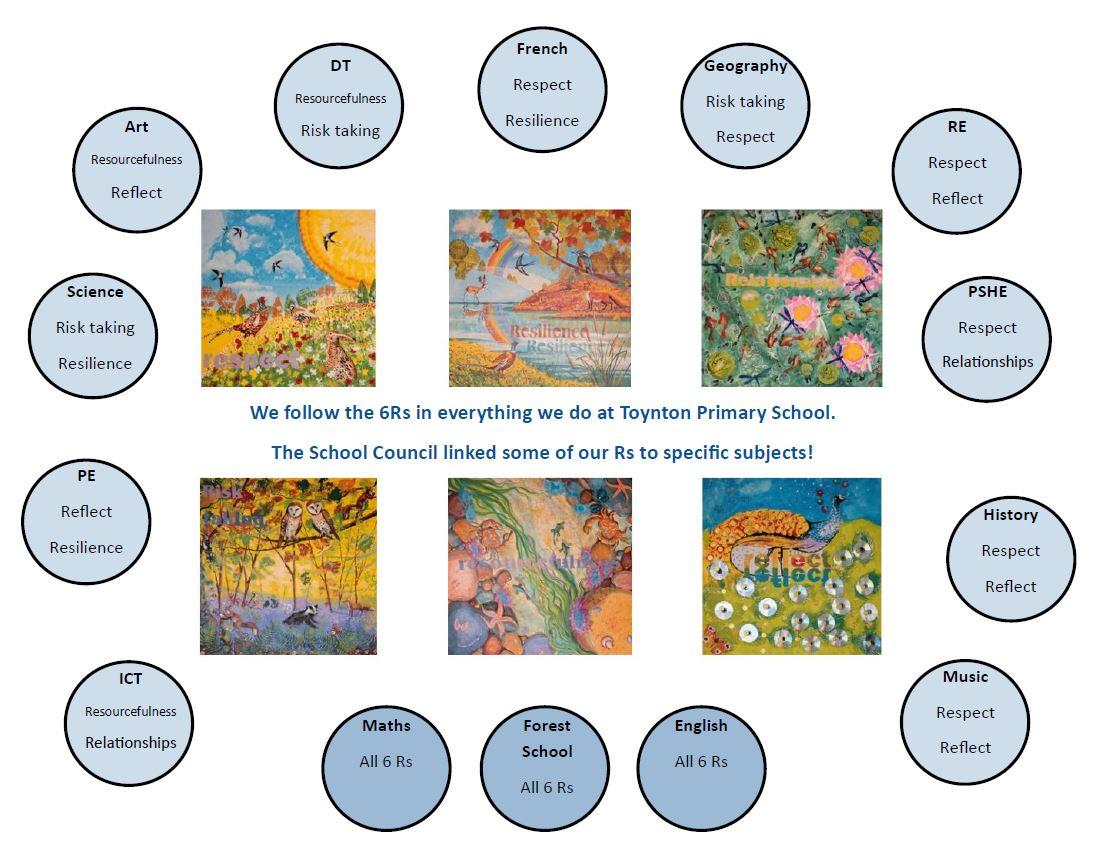
At Toynton All Saints Primary School, we use research-backed strategies for Teaching and Learning to help all of our children reach their potential. We teach using Explicit Instruction, and the "I do, we do, you do" approach to support pupils being able to know more, and do more.
We begin our reading journey following the Read Write Inc phonics scheme to develop Early Reading with our pupils from the beginning of their time in Little Acorns. Once children have developed the phonological skills to decode a wide range of words, we progress into the Accelerated Reading system where pupils are assessed termly, given the opportunity to choose, read, and then take books home matching their improving levels. We cherish books and reading at Toynton, reading independently and as a whole class, focussing on developing our comprehension skills and developing a love of reading throughout each year group.
Within our writing curriculum, we use Literacy Tree to expose our pupils to a variety of writing opportunities, weaving in our reading, spelling, grammar and handwriting skills through stand-alone opportunities and through a cross-curricular approach. We enjoy a range of high-quality texts and sources to inform our writing purposes, weaving core skills into each sequence, ending in lots of independent writing opportunities. We appreciate and celebrate a range of literature, from poetry to comics and narratives to non-fiction.
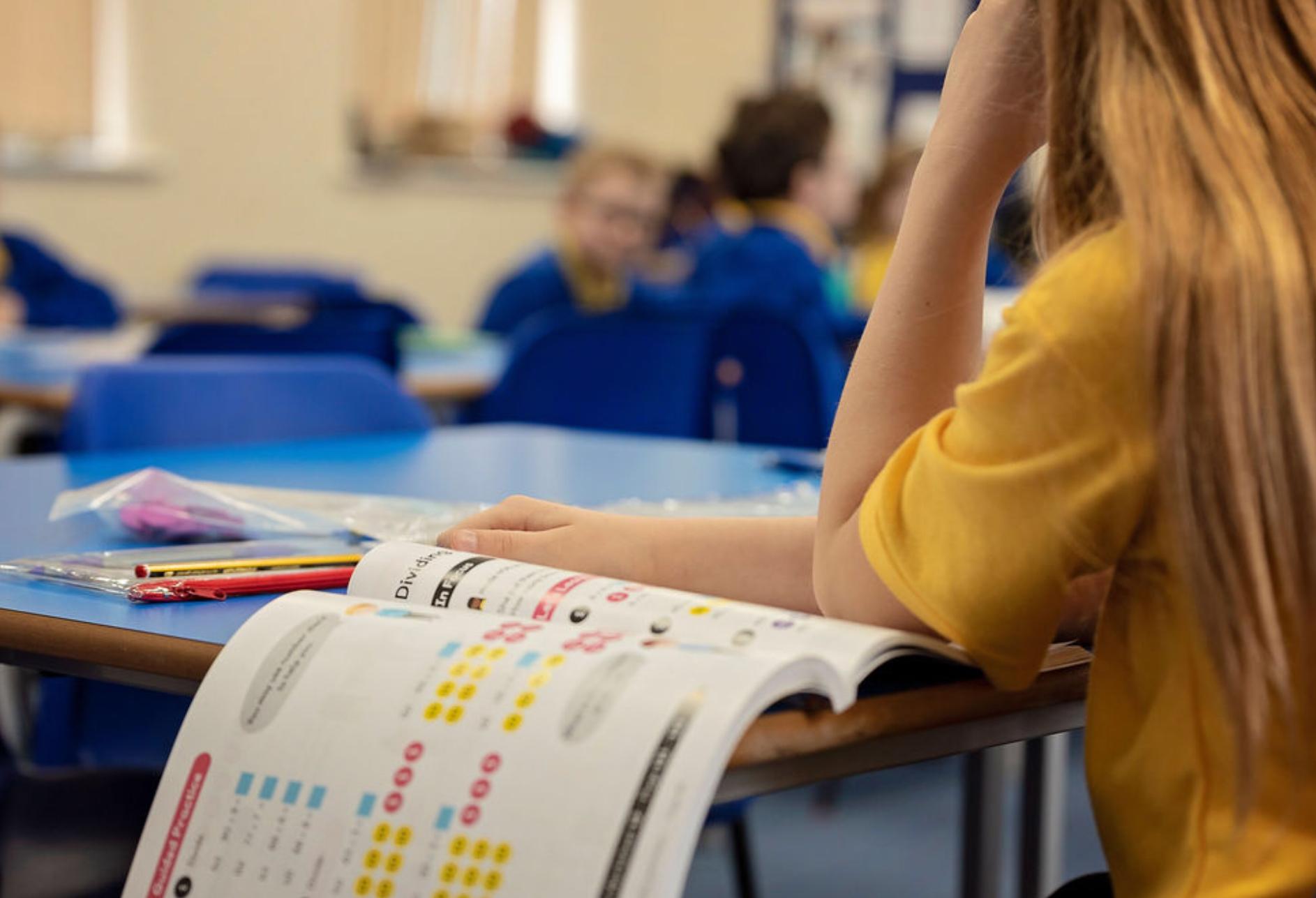
In Maths, we teach using a Maths Mastery Approach. From the children's time in EYFS, we develop strong mathematical foundations using the NCETM Mastering Number program. In Years 1 – 6 we use the Oak National Academy to support and enhance the teaching of mathematics. Oak's carefully sequenced curriculum is aligned with the National Curriculum and provides high-quality lessons that build knowledge and skills in a logical order. This helps ensure consistency in learning across the school and supports pupils in developing a secure understanding of key mathematical concepts.
Throughout Years 1-5, we continue to support children’s developing fluency in stand-alone sessions following the NCETM's research-backed Mastering Number program.
Science learning at Toynton facilitates the acquisition of knowledge and develops skills progressively in accordance with the National Curriculum. Pupils learn in a hands-on environment through research, experimentation and observation and are encouraged to be curious, questioning and draw evidence-based conclusions. A wide range of biology, chemistry and physics is experienced through both individual and collaborative learning across all year groups.
In History, children begin by focussing on making sense of their own life-story and immediate family history. The children are taught to recognise similarities and differences between things in the past and now. By the end of Year 6, the children will understand key substantive knowledge for historical topics within pre-history, Ancient Civilisations of the world, 20th Century global history, British and local history; the key historical skills taught include chronological understanding, an awareness of different interpretations of history, and the ability to communicate knowledge, in an effective way, to best present historical facts.
Geography learning at Toynton is intended to develop pupils’ understanding of the world whilst simultaneously developing their geographical skills and encouraging learners to think ‘like a geographer.’ Both human and physical elements are covered throughout and progression in both content and skills is central to our curriculum planning and the choice of geography topics for each year group, working through the progression of 'local - national - international'.
At Toynton All Saints, we believe that Physical Education and Outdoor Education is vital to our well-being and our children have the opportunity to access their entitlement of physical activity. Children take part in 2 hours of PE weekly. We encourage all students to enjoy sport and be successful at their level, making participation a positive experience. We compete in a range of school sports events within the local area and we offer a variety of afterschool clubs. We also have our Forest School environment which our children use to learn practical skills and teamwork.
In Art, we use a range of equipment and media to explore, experiment and master key skills in drawing, painting, sculpting and sewing. We use our art sketchbooks to record our journey throughout school, highlighting our growing independence and skills. We respond to, and appreciate the work of past, present and upcoming artists using their approaches and techniques to inspire our own work. Throughout the year, as a school, we use art to celebrate and express our local and British culture, highlighting key events and inspirational individuals.
In Design and Technology, we use a variety of equipment to design, make and evaluate various products, problem solving and developing our evaluative skills. With our class termly topics, year groups are encouraged to produce products for purpose, learning different processes, highlighting our mistakes and adapting our future practice.
We teach PSHE across the school using a scheme called One Decision. This begins in the Early Years with the children following coloured Rainbow Drop characters on their adventures, where they learn to understand and manage situations and scenarios they may experience now, or in the future. These have been carefully designed to support children to reach the expected goals within the Early Years framework for PSED. In KS1 and KS2 the children meet Deedee and Darlee, who guide them through activities and scenarios, and encourage good decision making inside and outside of school across a range of topics including friendships, online safety, keeping safe and healthy. These topics all support the new statutory changes in Health Education and Relationships Education.
We teach French in KS2 as our Modern Foreign Language. The children enjoy interactive resources with native speakers and presentations; the lessons provide lots of opportunity to practise speaking a variety of words and phrases across a range of different topics.
Music is taught through the Sing Up scheme which covers a wide variety of musical eras and genres. Lessons integrate musical appreciation, performance and composition and allow the children to develop both their skills and musical preferences. To compliment the lessons, music is used across the curriculum as both inspiration and illustration and singing is practised in dedicated weekly assemblies. Children also have enrichment opportunities across their time with us at Toynton, including working with the Lincolnshire Music Service in Key Stage 1, and having Musical Theatre sessions in Key Stage 2. We also have a very active and popular choir, giving our children the opportunity to sing for pleasure in the Spilsby Music Festival and at Young Voices each year.
Computing is taught both as a stand-alone lesson and to support other subjects across the curriculum. Children are exposed to a variety of aspects of computing including: multimedia, handling data, technology in our lives, coding and online safety.
Within our RE curriculum, we follow the Lincolnshire Agreed Syllabus. The sessions ensure the children acquire and develop knowledge and understanding of Christianity and other principal religions represented in the UK. Pupils are given the opportunity to develop an understanding of different religious beliefs while contributing to their spiritual, moral social and cultural development.